Mattress Buying Guide
Latex Mattress Feel: A Practical Guide to Bounce, Firmness, and Fit
A latex mattress doesn’t wait for you to sink in. It responds quickly, offering buoyant support that can feel springy, gently cushioning, or surprisingly firm depending on what lies beneath the cover. Understanding that feel—and how it changes with construction, body shape, and sleep position—can help you decide whether latex belongs in your bedroom.
Mattress shopping often begins with a word that seems to promise an answer: firm, plush, hybrid, natural. But labels can obscure as much as they reveal. “Latex” tells you something about a mattress’s material, not the precise sensation you’ll experience when you lie down. Two beds containing latex may feel markedly different because their layers, proportions, covers, and support systems differ.
The most recognizable trait of latex is its quick response. Press a hand into the surface and it tends to push back promptly. Lie down and the material generally conforms without the slow, enveloping sensation associated with some pressure-relieving foams. For some sleepers, that buoyancy makes it easier to shift positions. Others may find the springier quality too lively, or may prefer a deeper, slower contour.
There is no universally correct mattress feel. The useful question is more personal: does this surface cushion pressure points while keeping your body comfortably supported in the position you actually sleep in? A thoughtful comparison goes beyond material names and firmness ratings to consider the complete construction and the way your body responds.
What “responsive” feels like
Responsiveness describes how readily a mattress reacts to pressure and returns toward its original shape when that pressure changes. Latex is widely associated with a buoyant, elastic response. Rather than forming a deep impression that lingers, it tends to adjust quickly as you move. The sensation is sometimes described as floating on the mattress rather than sinking deeply into it, though the exact experience depends on the design.
This quality can be welcome for combination sleepers who roll from side to back or change positions through the night. A surface that rebounds readily may feel less restrictive during those movements. It can also be appealing to people who dislike the feeling of being closely enveloped by a mattress.
But “responsive” does not mean “bouncy” in exactly the same way for every bed. A latex comfort layer above a substantial support core may feel lively at the surface while remaining stable underneath. In a hybrid, coils can add another kind of spring. The cover and any quilted materials can soften or temper the initial sensation. The result is a system, not a single ingredient acting alone.
Before deciding that bounce is either a benefit or a drawback, consider what you want the mattress to do. Do you want to change position easily? Do you prefer a close, molded sensation? Are you sensitive to motion from a partner? These are separate questions. A material’s quick recovery may affect how movement feels, but it does not by itself determine how much motion reaches the other side of the bed.
Firmness is a starting point, not a verdict
Firmness is usually presented as a scale, from soft to firm. It is useful shorthand, but not a universal measurement. A mattress described as medium-firm by one maker may not feel identical to a mattress with the same label from another. Individual perception also varies: the same bed can feel more yielding to one person and more supportive to another.
Body weight, body shape, and the distribution of pressure all influence how far a sleeper settles into a surface. A lighter person may not compress a firm layer as much as a heavier person does. Someone with broader shoulders or hips may experience more pressure in those areas than someone whose weight is distributed differently. This is why a firmness label alone cannot reliably predict comfort.
Construction matters just as much. A mattress can pair a softer latex layer with firmer material below it, creating a cushioned surface over a more supportive base. Another design may use a firmer comfort layer throughout. The same material can therefore contribute to different overall experiences. Look for descriptions of the layers and their order, not just a headline firmness rating.
It can help to separate two sensations that shoppers often bundle together. Comfort is how the top of the mattress feels against the body: soft, cushioned, firm, or pressure-relieving. Support is whether the underlying structure helps maintain a comfortable, aligned posture. A mattress can feel soft at first touch yet offer substantial support below, or feel firm without providing the cushioning a particular sleeper needs.
How sleep position changes the equation
Your usual sleep position offers a practical way to think about fit. It does not prescribe one correct firmness, but it can reveal where you may need more cushioning or a steadier surface. Pay attention to how your shoulders, hips, and lower back feel—not only to the first impression when you sit on the edge.
Side sleepers
Side sleeping concentrates pressure around the shoulder and hip. A surface that is too firm for your body may leave those areas feeling compressed, while a very yielding surface may allow the body to settle more than feels comfortable. Side sleepers often benefit from enough cushioning to accommodate these contours while retaining support underneath.
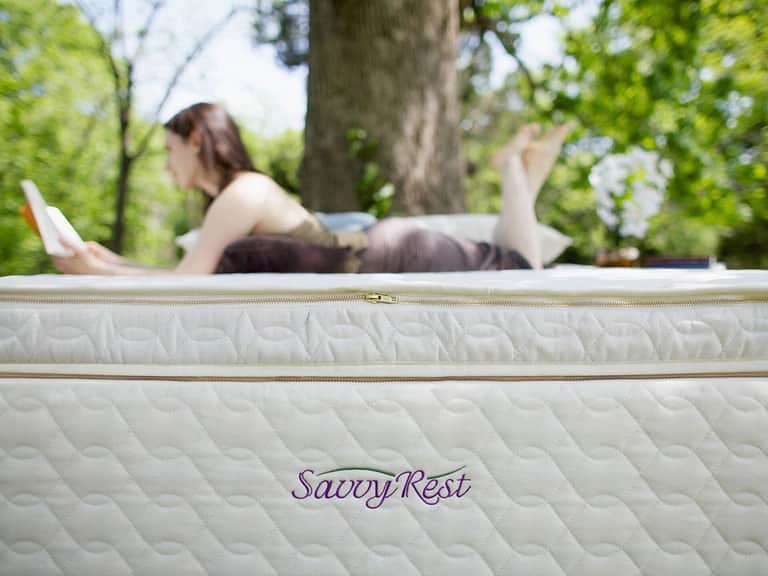
Latex can provide pressure relief, but the word alone does not guarantee it. The thickness and softness of the comfort layer matter, as does the sleeper’s body shape. People comparing models should consider whether the top layer can yield at the shoulder and hip without allowing the rest of the body to feel unsupported. A plush design, such as the Savvy Rest Unity Pillowtop Latex Mattress, uses a soft upper layer and offers configurable layers; that makes its construction relevant to shoppers exploring adjustable latex comfort, though personal fit still depends on individual needs.
Back sleepers
Back sleepers may prefer a surface that balances cushioning with an even, supportive feel. Too little give can make the lower back feel as though it is not settling comfortably; too much sink can feel unstable. Instead of seeking a particular number on a firmness scale, notice whether the mattress feels supportive from the shoulders through the pelvis and whether you can relax without bracing against the surface.
Stomach sleepers
Stomach sleepers may be especially attentive to how much the midsection sinks. If a mattress yields too much under the torso, the resulting posture may feel uncomfortable. A firmer or more supportive construction may be worth trying, but individual weight and shape still matter. Test the bed in your normal position for long enough to notice whether the support remains comfortable, rather than judging it from a brief press of the hand.
Combination sleepers
People who move among positions may value latex’s quick response because the surface can recover promptly as pressure shifts. Still, responsiveness is only one part of the experience. A bed that feels easy to move on must also provide enough cushioning in each position you use regularly. If you sleep on your side for part of the night and your back for the rest, evaluate both rather than choosing on the basis of movement alone.
The layers beneath the label
“Latex mattress” can describe several different arrangements. Some mattresses use latex as a comfort layer over another kind of support core. Others contain multiple latex layers, sometimes with different firmness levels. Hybrids combine a latex layer with a coil support system. Each arrangement can change how the surface responds, how deeply the sleeper settles, and how the mattress feels at the edges.
Layer thickness is one clue. A thicker comfort layer can create more room for the body to settle into the mattress, though its effect depends on firmness and the materials beneath it. A thinner layer over firmer support may feel more direct. A mattress with several layers may allow a more graduated transition from plush surface to firmer foundation. Those are tendencies, not guarantees: design details and individual perception still matter.
Some layered mattresses allow the owner to choose or rearrange firmness levels. That flexibility can be useful for shoppers who are uncertain about their preferred feel, or couples who want different support on each side where the design permits it. It also means there are more decisions to make. Ask how the layers are arranged, whether the chosen configuration can be changed later, what exchange terms apply, and whether the cover or setup has specific requirements.
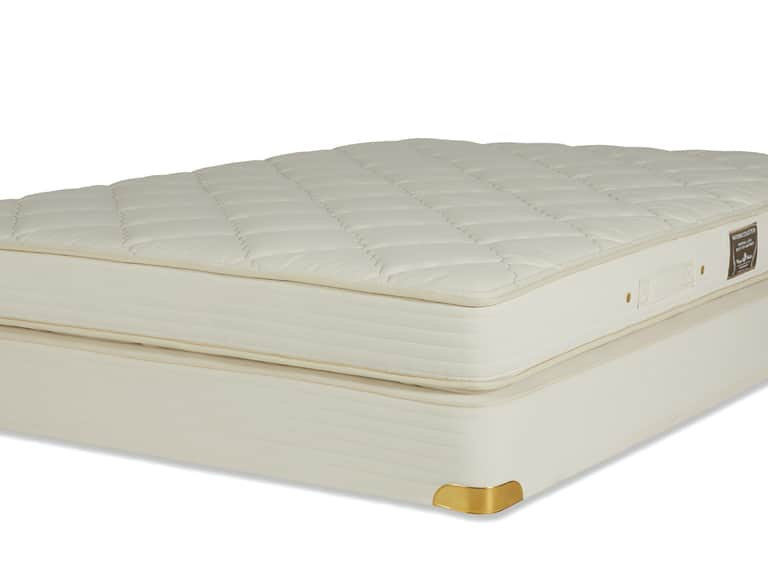
As one example of an all-latex construction, the Royal-Pedic Natural Latex Quilt-Top Mattress combines a six-inch firm latex core with a two-inch medium layer, surrounded by wool and cotton. That description gives a clearer picture than the word “latex” alone: shoppers can see that the mattress uses more than one firmness level and includes a quilted natural-fiber surround. It does not establish that the bed will suit everyone, but it illustrates why layer details are worth reading.
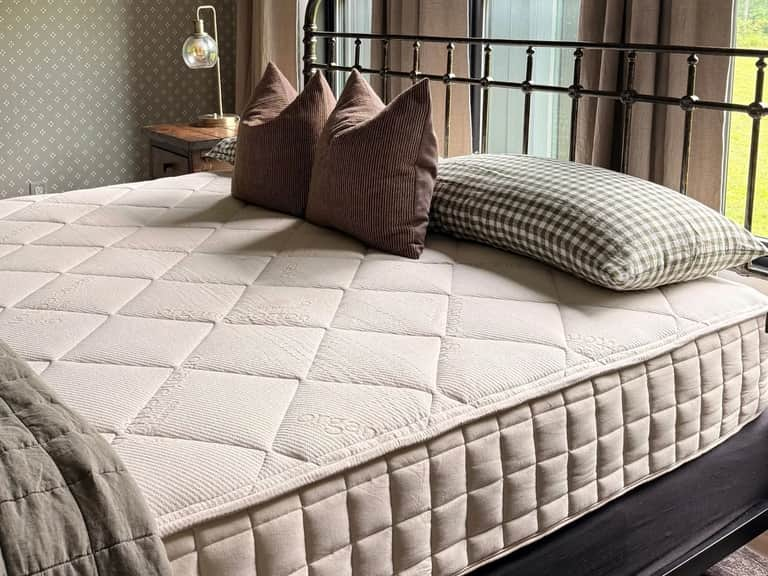
A hybrid follows a different path. The Naturepedic Serenade Organic Hybrid Mattress, for instance, pairs an organic Dunlop latex comfort layer with encased coils. In a design of this kind, latex contributes to the surface feel while the coil system forms the main support structure. Shoppers comparing an all-latex mattress with a hybrid should consider the entire combination, not assume that the latex layer will feel identical in both.
What to notice when testing a mattress
A short showroom visit cannot reproduce a full night’s sleep, but a deliberate test is more informative than a quick sit. Lie down in your usual sleep position. Give the surface time to settle. Notice where your weight is concentrated and whether you feel pressure, excessive sinking, or a sense of being held comfortably in place.
- Try your real positions. Spend time on your side, back, or stomach as appropriate, including positions you commonly switch into.
- Notice pressure at the shoulders and hips. These areas can reveal whether the comfort layer is yielding enough for you.
- Check the middle of your body. Ask whether the surface feels stable and comfortable through the torso and pelvis.
- Change position. See whether the mattress responds in a way that feels easy or whether you prefer a slower, closer contour.
- Consider your sleep partner. If you share the bed, test movement and discuss whether different firmness needs can be accommodated.
- Review the trial and exchange terms. Comfort is difficult to judge fully in minutes, so understand the retailer’s policies before buying.
If testing at home, keep a brief record of how the mattress feels in the morning as well as at bedtime. Initial impressions can change as you become accustomed to a new sleep surface. A return or comfort-exchange period is valuable only if you know its duration, fees, exclusions, and steps for requesting a change.
The base, cover, and other details
A mattress does not perform in isolation. The foundation or frame can influence the feel and the support beneath it. Follow the manufacturer’s requirements for the type and spacing of slats or the use of a platform, foundation, or adjustable base. An unsuitable base may compromise support or conflict with warranty conditions. If you already own a frame, confirm that it is compatible before ordering.
The cover and quilted materials contribute to the first impression, too. Wool, cotton, or other fibers above the latex can alter the surface feel and may affect how warm or cool the bed seems to an individual. Temperature comfort is personal and depends on more than the mattress: bedding, bedroom conditions, and sleepwear are part of the picture. Treat material descriptions as information about construction, not a guarantee that you will sleep at a particular temperature.
It is also worth checking practical matters often left until checkout: mattress height, sheet depth, delivery arrangements, setup requirements, care instructions, and the terms of the warranty. Latex mattresses can be heavy, especially layered models. If a mattress has adjustable or customizable layers, understand whether assembly is required and whether future adjustments are available.
Who may appreciate the feel of latex?
Latex may appeal to sleepers who want a responsive surface, prefer not to sink deeply into a mattress, or move frequently during the night. Its quick recovery can make the bed feel lively and adaptable. Layered models may also suit shoppers who want to compare or customize different firmness arrangements, subject to the options available in a given design.
It may be less appealing to someone who wants a slow, enveloping sensation or who associates comfort with sinking closely around the body. Some people simply do not enjoy the elastic feel. That is not a failure of their sleep habits or a flaw in the material; it is a matter of preference. A mattress is a long-term household purchase, and a theoretically impressive construction is not useful if its feel does not work for the person sleeping on it.
Nor does latex automatically solve pain, guarantee better sleep, or ensure correct spinal alignment for every sleeper. Mattress comfort is one factor in a broader sleep environment. If you have persistent pain, numbness, or other health concerns, a mattress guide cannot diagnose the cause. Consider discussing ongoing symptoms with a qualified health professional.
A simple comparison checklist
When comparing latex mattresses, use the same questions for each model. Consistency makes it easier to distinguish a meaningful difference from polished marketing language.
- What materials make up the comfort and support layers?
- How thick are the latex layers, and are different firmness levels used?
- Does the design include coils or another support system beneath the latex?
- Can you choose or change the firmness configuration?
- How does the surface feel in your main sleep position and in positions you switch to?
- Does the mattress allow enough cushioning at pressure points without feeling unstable?
- What foundation does the manufacturer recommend?
- What are the trial, return, exchange, delivery, and warranty terms?
The practical conclusion
Latex has a reputation for buoyant, quick-response support, but that reputation is only the beginning of the story. Firmness, layer arrangement, mattress height, cover materials, support components, and sleeper position all shape the final feel. The same broad material category can produce a cushioned surface, a firmer and more direct sensation, or a blend of the two.
Start with what your body needs: where you feel pressure, how much you move, and which positions you occupy most often. Then look past the label to the construction. Compare the comfort layers with the support core, test the mattress in your ordinary positions, and read the policies that determine how easily you can make a change if the fit is not right.
The best mattress is not the one with the most persuasive adjective. It is the one that feels comfortable to you, supports you in the positions you actually sleep in, and suits the practical realities of your bedroom and budget. For latex, as for any mattress, that judgment is best made by pairing clear construction details with a patient, personal test.