Bedding & Sleep Comfort
Mattress Protector or Mattress Pad? Choosing the Right Bedding Layer
They sit in nearly the same place on the bed, fit over the same mattress and are often sold side by side. But a mattress protector and a mattress pad solve different problems. One is chiefly a barrier; the other is chiefly a comfort layer. Knowing which job matters most can help you protect your mattress, adjust the feel of your bed—or choose a little of both.
Start with the mattress itself: an investment expected to support you night after night, yet exposed to sweat, spills, skin oils, dust and the ordinary friction of daily life. The fitted sheet catches some of that contact. It is not, however, necessarily a waterproof shield, and it is not designed to add meaningful cushioning.
That is where mattress protectors and mattress pads come in. A protector is intended to help defend the mattress from moisture and everyday wear. A pad generally adds softness or loft to the sleep surface. Some products combine protective and comfort features, which makes the label alone an unreliable guide. Construction, materials and care instructions tell a more useful story.
The choice is less about which layer is universally better than about what your bed needs now. If safeguarding the mattress is the priority, look closely at a protector. If the mattress feels too firm or you want a lightly cushioned surface, a pad may be more useful. If you want both, decide whether a combined product meets your needs or whether two separate layers make more sense.
What a mattress protector is designed to do
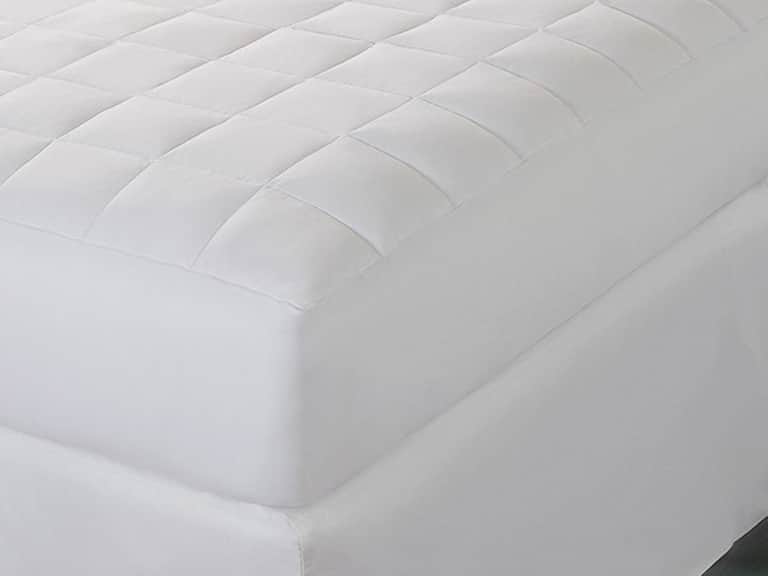
A mattress protector is a fitted barrier between the sleeper and the mattress. Depending on its design, it may help limit exposure to moisture, stains, dust and routine wear. Waterproof models typically use a barrier layer beneath the fabric surface. That layer can be valuable in homes with children, pets, recurring spills or other situations where liquid reaching the mattress is a concern.
“Water-resistant” and “waterproof” are not interchangeable promises. A water-resistant fabric may repel small amounts of liquid but is not necessarily built to contain a larger spill. A waterproof protector is intended to block liquid from passing through under specified conditions, though performance can vary by construction and care. Read the product description and care label rather than relying on a short name or a broad marketing claim.
Protection also has limits. A fitted protector cannot repair a damaged mattress, guarantee a completely sealed enclosure or substitute for prompt cleaning after a spill. If you need protection against allergens or bedbugs, a standard fitted waterproof protector may not be the right product: specialized encasements are designed to enclose the mattress more fully. Check the product’s intended purpose and consult a qualified professional if you have a health concern.
The trade-off is feel. A protector with a substantial waterproof backing may feel different from a thin, breathable fabric layer, and some sleepers notice warmth or sound. Newer constructions vary widely, so avoid assuming that every waterproof protector feels the same. Look for details about the top fabric, barrier material, breathability and any specific claims about noise or temperature.
What a mattress pad adds
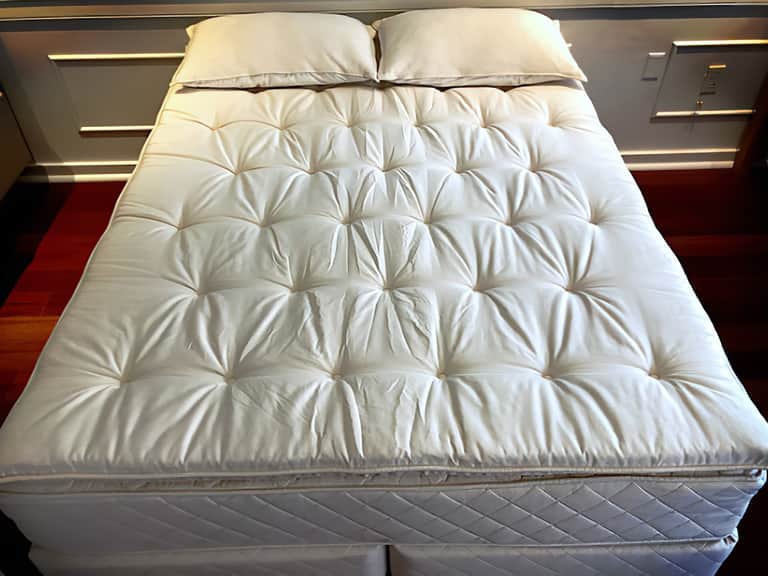
A mattress pad is primarily a comfort layer. It sits on top of the mattress and beneath the fitted sheet, adding a modest amount of cushioning, loft or softness. Pads may use cotton, down, down alternatives or other fills. Their feel depends on the fill, shell fabric, thickness and quilting—not just on the word “plush.”
A pad can make a sleep surface feel a little more welcoming, but it is not a reliable fix for a mattress that has lost its support or developed deep impressions. A thin layer may soften the initial feel; it cannot restore the underlying structure. Similarly, a mattress pad is not automatically waterproof. Unless the maker specifically describes a moisture barrier, treat the pad as a comfort accessory rather than a spill shield.
Construction affects how a pad behaves over time. Quilting or sewn-through compartments can help keep fill in place, while elasticized sides or anchor straps help secure the pad. The depth of those sides matters: a pad that is too shallow may creep off a thick mattress, while a loose fit can bunch beneath the sheet. A smooth, secure fit is more than a finishing detail; it can influence comfort through the night.
For instance, the Arcadia Mattress Pad is described as a cushioning layer with pluma-fil down-alternative fill, a cotton sateen shell and sewn-through construction intended to help distribute the fill. Its elasticized sides are designed for mattresses up to 17 inches deep. Those details make it an example of a comfort-oriented pad; they do not, by themselves, indicate that it is waterproof.
The practical difference, at a glance
| Feature | Mattress protector | Mattress pad |
|---|---|---|
| Main purpose | Help shield the mattress from moisture and everyday wear. | Add cushioning, loft or a softer surface feel. |
| Water protection | May be water-resistant or waterproof; verify the exact construction. | Not assumed. Look for an explicit moisture-barrier claim. |
| Change to comfort | Usually modest, though fabric and backing can affect feel. | Often the central purpose, with results depending on fill and thickness. |
| Best first question | What do I need to keep from reaching the mattress? | What do I want the sleep surface to feel like? |
The distinctions are useful, not absolute. A padded protector may offer a little extra cushioning. A pad may be marketed with protective benefits. But a product that combines functions should be evaluated against each function separately: Does it have a stated waterproof barrier? Is the padding substantial enough to change the feel? Can it be laundered as often as your household requires?
Which one should you choose?
Consider the problem you are trying to solve before comparing fabrics or finishes. A short decision process can make the choice clearer:
- Choose a protector first if preventing spills or moisture from reaching the mattress is your main concern. Confirm whether the product is waterproof or merely water-resistant.
- Choose a pad first if the mattress is in sound condition but feels harder or less cushioned than you prefer.
- Consider both if you need a moisture barrier and want additional softness. Check that the layers fit together without slipping or making the bed feel too warm.
- Look beyond either category if the mattress is sagging, uncomfortable because its support has changed, or unsuitable for your needs. A thin bedding layer is not a substitute for addressing the underlying mattress.
Household circumstances matter. A guest bed used occasionally may call for different priorities than a child’s bed, a pet’s favorite sleeping spot or a mattress that is difficult to replace. If spills are a realistic possibility, prioritize the barrier. If the mattress is protected already but needs a gentler surface, comfort may take the lead. For allergy-related concerns, read product details carefully and seek medical advice for questions about symptoms or treatment.
There is no universal need to buy both. Adding layers can increase warmth, alter the feel and create more laundry. The best setup is the simplest one that meets your actual needs.
Fit and mattress depth are easy to overlook
A well-made layer cannot do its job if it does not stay in place. Measure the mattress from its sleeping surface to the bottom edge, including any pillow-top or permanently attached comfort layer. Then compare that measurement with the product’s stated pocket depth or compatible mattress height. Do not assume that a standard size—Queen, for example—also guarantees a suitable fit around the mattress’s depth.
Pay attention to the attachment style. Fitted skirts stretch around the mattress; anchor bands or corner straps hold a layer in place in a different way. Consider whether the design is compatible with an adjustable base, if you use one, and whether the manufacturer provides guidance about mattress thickness. A protector that rides up or a pad that shifts can create wrinkles beneath the sheet, undermining the very comfort you are trying to improve.
Also account for every layer already on the bed. A mattress, protector, pad and deep fitted sheet have to work as a system. If a fitted sheet is already difficult to secure, adding a thick pad may leave it too tight. If a waterproof protector sits beneath a thick comfort layer, spills on the top layer may still require immediate attention. Think through the order and purpose of each item instead of shopping for a single label in isolation.
Breathability, temperature and feel
Comfort is not only about softness. The surface against your body, the materials inside the layer and the way moisture moves through them can all influence how a bed feels overnight. Cotton can feel familiar and breathable, while synthetic barrier films are used in many waterproof designs. Product construction varies, and the material name alone cannot predict the experience for every sleeper.
If you tend to sleep warm, search for specific information about fabric, barrier design and airflow. A thick, lofty pad may feel cozier, but it also adds another layer between you and the mattress. A protector’s backing may change the feel beneath the sheet, although some designs are made to be quieter or less noticeable. Reviews can help identify recurring impressions, but they cannot guarantee that a product will feel the same in your room or on your mattress.
Firmness is another area where expectations can outrun what a pad can deliver. A comfort layer may soften the first contact with a mattress, especially if it has useful loft. It usually will not transform a very firm bed into a deeply plush one, nor correct poor support. If comfort remains a problem after trying an appropriate layer, reassess the mattress itself rather than accumulating more bedding.
Care instructions are part of the purchase
A layer that protects the mattress but is difficult to clean may not suit a household where accidents are likely. Before buying, find out whether the product is machine washable, whether it must be washed on a gentle cycle and how it should be dried. Some fills need low heat or special handling; some items are not intended for frequent washing. Follow the label rather than improvising, since high heat, bleach or fabric softener can affect particular materials and finishes.
For waterproof protectors, care is especially important. Detergents, heat and repeated laundering may affect a barrier depending on its construction and the manufacturer’s instructions. Promptly clean spills and allow any damp layer to dry fully before remaking the bed. A pad that can be washed is still not necessarily designed to withstand the same cleaning frequency as a simpler protector.
It can help to compare the care routine with your real schedule. If a layer requires a large-capacity washer, line drying or specialist cleaning, consider whether that is practical. Ease of maintenance is not an unimportant footnote. It is part of how well bedding performs over months and years.
Can you use a mattress protector and a mattress pad together?
Yes, many people use both. A common arrangement places the protector closest to the mattress and the pad above it, with the fitted sheet over the top. In this setup, the protector provides the intended barrier while the pad changes the surface feel. But instructions differ, so follow the maker’s guidance for each item and make sure the combination fits securely.
Layer order deserves a moment of thought. If the pad is not waterproof, a spill on the sheet can pass through it before reaching the protector underneath. That is generally the point of putting the barrier closest to the mattress. If a combined pad-protector is used instead, confirm that its construction offers the kind of protection you need and that its cushioning is sufficient for your comfort goals.
Check the finished bed for movement and excess heat. Tuck the layers smoothly, test the fitted sheet and adjust the arrangement if anything bunches when you lie down or move. A technically correct setup is not useful if it is uncomfortable or comes loose each night.
A quick shopping checklist
Before you decide, answer these questions:
- Is the primary goal spill protection, added cushioning, or both?
- Does the product explicitly state that it is waterproof, water-resistant or neither?
- What materials and construction make up the surface and, if applicable, the barrier?
- What is the mattress’s full depth, and will the fitted sides or attachments accommodate it?
- Will the layer work with existing bedding and an adjustable base, if relevant?
- What are the washing and drying requirements?
- Will the extra layer change the bed’s warmth or feel more than you want?
Keep the answers in view when comparing products. Thread counts, fill descriptions and promotional language can sound impressive, but they do not replace the basics: what the item is designed to do, how it fits and whether you can care for it properly.
The bottom line
A mattress protector and a mattress pad are not rivals so much as different tools for a better-kept bed. The protector’s central task is to help shield the mattress, especially from moisture when it is specifically designed to be waterproof. The pad’s central task is to add cushioning or adjust the surface feel. Some bedding blends the two roles, but the details matter more than the category name.
Choose according to your main priority, then check fit, breathability and care. If protection comes first, make the barrier claim explicit. If comfort comes first, focus on fill, loft and construction. If you need both, use layers that fit securely and do not compromise sleep. The right choice is not necessarily the thickest, most technical or most expensive one. It is the layer—or uncomplicated combination of layers—that meets the needs of your mattress and the people who sleep on it.